Currently Empty: R0.00

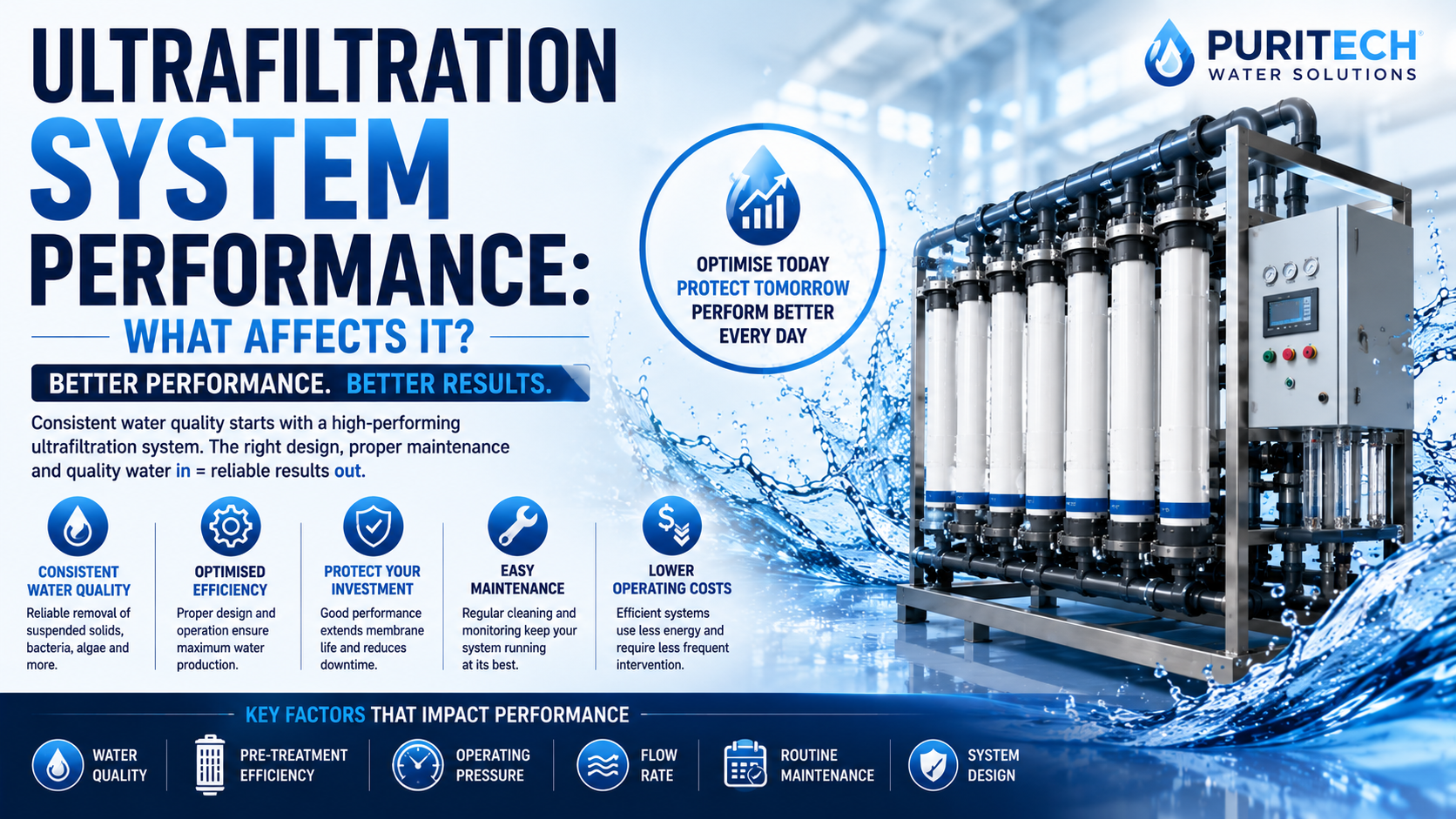
Ultrafiltration System Performance: What Affects It?
Ultrafiltration system performance depends on more than the quality of the membrane alone. While the membrane plays a critical role, factors such as feed water quality, operating pressure, flow rate, pre-treatment, and routine maintenance all influence how efficiently an ultrafiltration system operates.
A properly designed and maintained system consistently produces clean, high-quality water while protecting the membrane from unnecessary wear. On the other hand, poor operating conditions can reduce water production, increase maintenance requirements, and shorten membrane lifespan.
Understanding the factors that affect ultrafiltration system performance helps homeowners, businesses and industries maximise efficiency and reduce long-term operating costs.
What Does Ultrafiltration System Performance Mean?
Performance refers to how effectively an ultrafiltration system produces clean water while maintaining stable flow rates, reliable contaminant removal and efficient operation.
A high-performing system should provide the following:
- Consistent water quality
- Stable water production
- Reliable removal of suspended contaminants
- Low operating pressure
- Efficient membrane operation
- Predictable maintenance intervals
When these elements work together, the system delivers dependable performance over many years.
Feed Water Quality
Feed water quality is one of the biggest factors affecting ultrafiltration system performance.
Water containing high levels of suspended solids, algae, or organic matter increases the load on the membrane.
Consequently, systems treating poor-quality water generally require the following:
- More frequent backwashing
- Additional pre-treatment
- Closer performance monitoring
A professional water analysis identifies these challenges before system selection.
Operating Pressure
Ultrafiltration membranes require pressure to move water through their microscopic pores.
However, more pressure does not always produce better performance.
Operating within the manufacturer’s recommended pressure range helps the following:
- Maintain consistent flow
- Reduce membrane stress
- Lower energy consumption
- Extend membrane lifespan
Flow Rate
Flow rate also affects ultrafiltration system performance.
If water moves too quickly through the membrane, filtration efficiency may decrease.
Conversely, unnecessarily low flow rates reduce water production.
Correct system sizing ensures the ideal balance between filtration quality and production capacity.
The Importance of Pre-Treatment
Pre-treatment protects the ultrafiltration membrane by removing larger contaminants before they reach the membrane surface.
Depending on the water quality, pre-treatment may include the following:
- Sediment filtration
- Activated carbon filtration
- Iron and manganese removal
- Water softening
Effective pre-treatment reduces membrane fouling and supports long-term system performance.
Routine Maintenance
Regular maintenance is essential for maintaining ultrafiltration system performance.
Typical maintenance activities include:
- Automatic backwashing
- Forward flushing
- Chemical cleaning where required
- Replacing pre-filter cartridges
- Monitoring operating pressure
- Inspecting flow rates
Routine servicing helps maintain water quality while reducing the risk of unexpected downtime.
Common Causes of Poor Ultrafiltration System Performance
Even a well-designed system can experience reduced efficiency if maintenance is neglected or operating conditions change. Identifying the cause early helps prevent unnecessary downtime and protects the membrane.
Common causes include:
- Excessive membrane fouling
- Blocked pre-filters
- Incorrect operating pressure
- High levels of suspended solids
- Poor feed water quality
- Damaged membrane modules
- Inadequate maintenance
Fortunately, most of these issues can be addressed before they lead to major system problems.
How to Improve Ultrafiltration System Performance
Maintaining strong ultrafiltration system performance requires a combination of proper system design, routine servicing, and ongoing monitoring.
Perform a Water Analysis
Every successful water treatment system starts with understanding the quality of the incoming water.
A professional water analysis helps identify contaminants and determines whether additional treatment stages are necessary.
Replace Pre-Filters Regularly
Pre-filters capture larger particles before they reach the ultrafiltration membrane.
Replacing these filters at the recommended intervals helps maintain water flow and reduces membrane fouling.
Monitor Operating Pressure
Pressure gauges provide valuable information about system performance.
A sudden increase or decrease in pressure may indicate blocked filters, membrane fouling or another issue that requires attention.
Maintain Scheduled Cleaning
Routine cleaning keeps contaminants from accumulating on the membrane surface.
Depending on the system, maintenance may include the following:
- Automatic backwashing
- Forward flushing
- Chemical cleaning
- Air scouring
- Membrane inspections
Following the recommended maintenance schedule helps maximise efficiency and extend membrane life.
Avoid Oversizing or Undersizing
Choosing the correct system capacity is essential.
An undersized system may operate continuously under heavy demand, while an oversized system may not perform as efficiently as intended.
Proper sizing supports reliable long-term operation.
Monitoring Ultrafiltration System Performance
Monitoring system performance helps detect problems before they become costly.
Operators should routinely check the following:
- Water production rate
- Operating pressure
- Flow rate
- Water clarity
- Pressure differential across the membrane
- Cleaning frequency
Tracking these values over time makes it easier to identify gradual changes in system performance and schedule maintenance proactively.
Frequently Asked Questions
What affects ultrafiltration system performance the most?
Feed water quality is one of the biggest factors. High levels of suspended solids, algae and organic matter increase membrane fouling and may require additional pre-treatment.
Can pre-treatment improve ultrafiltration system performance?
Yes. Proper pre-treatment reduces the amount of contamination reaching the membrane, helping maintain stable flow rates, lower maintenance requirements and longer membrane life.
Does higher pressure improve ultrafiltration performance?
Not always. Operating the system within the manufacturer’s recommended pressure range provides the best balance between filtration efficiency, water production and membrane protection.
Why should system performance be monitored?
Routine monitoring helps detect changes in water quality, pressure and flow before they develop into larger problems. Early intervention often reduces maintenance costs and minimises downtime.
Conclusion
Maintaining excellent ultrafiltration system performance requires more than installing a high-quality membrane. Feed water quality, system design, operating pressure, flow rate, pre-treatment and routine maintenance all work together to determine how efficiently the system performs.
Regular inspections, scheduled cleaning and continuous performance monitoring help ensure reliable water production while protecting the membrane from unnecessary wear. Most importantly, beginning with a professional water analysis allows the system to be designed around the actual water quality, improving efficiency and supporting long-term reliability.
By following these best practices, homeowners, businesses and industries can maximise system performance, reduce operating costs and enjoy dependable, high-quality water for years to come.